The coast of Sudan is beautiful and mainly unspoilt but there are risks to it.
There are two potential treats to Coral Reefs; Naturally occurring or Manmade or Anthropogenic.
Naturally occurring problems can be a rise in water or surface temperature from Global Warming, storms causing physical damage from large waves, changes in Salinity of the water, unusual prolonged Low tides exposing Coral heads to air and sunlight. If Corals are exposed to harmful environmental factors they expel the Zooxanthellae Algae losing their Colour and become bleached.
Corals are also at risk from Predators; Fish, Sea Stars, Barnacles and Marine Worms all eat the soft tissues of Coral. Shifts in temperature and salinity can allow these Predators to proliferate.
Man-made threats can come from Pollution, Over fishing, Destructive fishing practices, Harvesting of coral for Jewellery or Aquariums and also for use in Building Materials.
In Sudan the biggest threat to the Reef is pollution from the Port itself, Desalination discharging very saline water onto Reefs and Sewage discharges from the City of Port Sudan.
Port Sudan is a busy working Port and therefore waters are not as clean as the rest of the coast. This is due to rapid development and lack of care or knowledge of the Marine life. In Port Sudan there are many risks to the Corals due to heavy industrial shipping, oil spills, land waste and habitat destruction. There have been many oil spills as there are multiple oil refineries.
A 70 kilometre strip of Coral was destroyed to allow ships to enter into the port freely. There are multiple factories and desalination plants. Desalination plants release very saline water back into the Sea damaging Coral. The harbour and all that contribute to it produces land and sea pollution that has a negative impact on the Coral Reefs and the sea life.
There is evidence from Bleaching that this is damaging some of the Coral around the Port area.
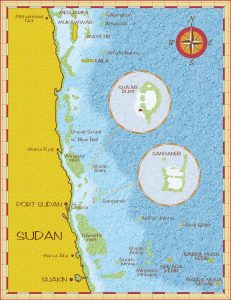
The Coral Reefs along the Sudanese Coast.